For more than five years, many young professionals from Cameroon benefited from one of Europe’s most prestigious government scholarships — the Swedish Institute Scholarship for Global Professionals (SISGP). Cameroon has now been removed from the list of eligible countries for this scholarship.
The scholarship covers full tuition fees paid directly to Swedish universities, some amounting to close to 270000 Swedish Krono, SEK, (some $30,000), a monthly stipend of about 11,000 SEK for living expenses (close to $1,200), and a travel grant of about 15,000 SEK (close to $1,600), including health and insurance coverage. Beneficiaries of the scholarship also gain membership in the SI Network for Global Professionals, as well as access to leadership training and international networking opportunities.
The scholarship, launched in the 2019–2020 academic year, is designed to fund one- or two-year master’s degree programs at Swedish universities, with about ten places each year, reserved for qualified applicants from Cameroon. Some countries are offered more than 10 places, and in total about 300 to 400 candidates benefit each year.
Cameroon, Others Removed from the List
In previous years, Cameroon was among the 41 eligible countries whose citizens could apply for the scholarship. However, in the latest eligibility list for the 2026 scholarship cycle, Cameroon is no longer included.

In an email to board members of Sweden Alumni Network Cameroon, Swedish Institute, SI’s Head of Unit, Scholarship and Leadership Programmes, Adiam Tedros, said SI amended the list of eligible countries, and the process now reflects “a variety of different stakeholder perspectives and consideration of several criteria, one of them being to achieve improved synergies between development cooperation, promotion, and trade policy.” Cameroon was thus removed from the list ahead of the 2025 call for applications for the SI scholarship.
The removal of Cameroon from the SISGP list means that Cameroonian students who wish to pursue master’s studies in Sweden must now generally pay their own tuition fees, which can be quite high for international students. However, some opportunities still exist at the university level through fee-waiver scholarships. For example, the well-known Axel Adler Scholarship offered by the University of Gothenburg provides a 100% tuition fee waiver for selected international students admitted to its master’s programs.
Why the Removal?
No official reasons have been provided by the Swedish Institute as to why Cameroon, Ghana, Gambia, Sudan, Myanmar, Zimbabwe, Malawi, The Russian Federation and several other countries were removed from the list, reducing the number of eligible countries from 41 to 34 after the inclusion of Uzbekistan in the 2026 call for applications. Countries such as Nigeria, South Africa, Tanzania, Uganda, Rwanda, Kenya and Vietnam, among others, remain eligible.
The Swedish Institute, SI scholarship targets selected partner countries whose professionals can contribute to sustainable development in their home countries. It is also important to note that in practice, changes to the eligibility lists in such a scholarship often reflect broader policy decisions, including strategic development priorities, adjustments to foreign aid programs, budget restructuring, shifts in development cooperation partnerships, and or wider diplomatic considerations.
Swedish Institute press officer, Tulle Durling, provided a clearer explanation when asked why some countries were removed from the list of eligible countries.
“The country list for the SI Scholarships was decided on in connection to the operationalisation of the new governing strategy of the Swedish Institute – Strategy for Innovation, partnership and capacity development 2024-2028. The current country list for scholarships is valid until 2028.
The countries were decided on, in close dialogue with the Swedish Ministry of Foreign Affairs and focused mainly on countries with potential strong synergies between trade and aid in Africa, Asia, Europe, MENA and Latin America. Other factors that were taken into consideration were the interest and number of applicants to Swedish universities,” she said.
The response suggests that the list of eligible countries is periodically reviewed, meaning previously ineligible countries, including Cameroon and others, could potentially become eligible. The strong interest of students from Cameroon and these other countries in Swedish universities is also a matter of concern.
The Swedish Institute’s removal of Cameroon from its scholarship eligibility list comes amid broader restrictions on Cameroonian students abroad. On 4 March 2026, the United Kingdom announced a suspension of new student visas for nationals of Cameroon, Afghanistan, Myanmar, and Sudan, citing a sharp rise in asylum claims from people who had entered the country on study visas. The ban is to take effect on 26 March 2026, stopping all new student visa applications from these countries.
Cameroon Authorities Maintain Their Usual Silence
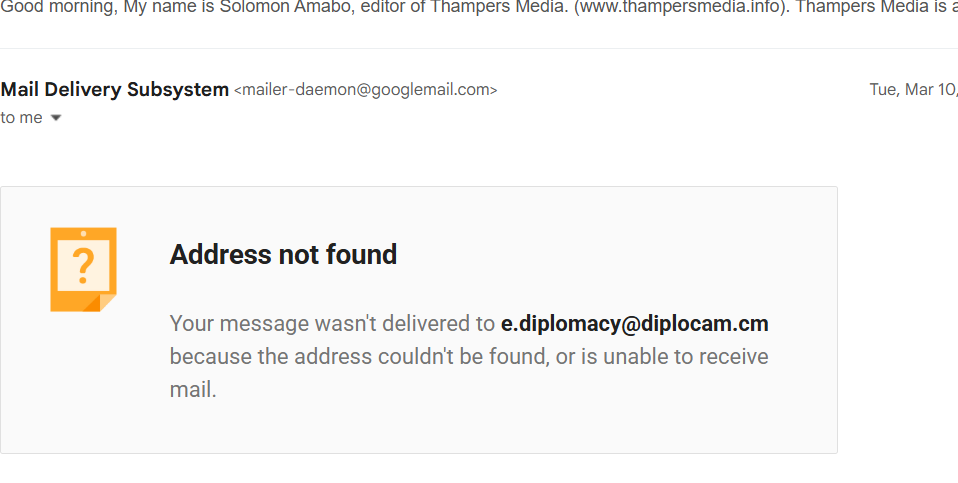
What makes the situation even more troubling is the usual silence from the Cameroonian authorities. An email Thamers Media sent to the Cameroon Ministry of External Relations failed to go through, as the address provided on its website was not working. Even if it had, little could have been expected in terms of a response.
Cameroon’s Deputy Minister of External Relations, Felix Mbayu, was quick to respond during the 2025 presidential election campaigns, when opposition leader Issa Tchiroma Bakary — widely regarded by many as the apparent winner—mentioned his contact with Southern Cameroons activists.
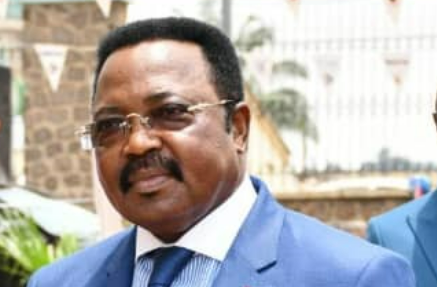
Yet on a matter directly affecting his ministry— Cameroon’s gradual exclusion from certain global academic opportunities — Mbayu has remained silent. Neither the Minister of External Relations, (Foreign Affairs) Le Jeune Mbella Mbella, nor the Minister of Higher Education, Prof. Fame Ndongo, have made any public statements on the issue. Some observers suggest that officials may have expected highly competitive scholarships to be managed by the government, allowing them to allocate awards at their discretion, including to family members or close associates.
SI Alumni Speak
Theodore Kindong, a Swedish Institute (SI) Scholarship alumnus and PhD researcher in Linköping University, Sweden, says he is deeply saddened by Cameroon’s removal from the 2025/2026 eligibility list.

“This decision which is a direct reflection of a weakening bilateral relationship between Cameroon and Sweden. This scholarship has been a transformative bridge for our professionals. Closing this door signals that Cameroon is currently not seen as a priority partner in Sweden’s new, trade-focused development framework,” he said.
“The Swedish Institute scholarship was a great opportunity for me to further my studies and obtained a Masters Degree in Exploration Geosciences from Luleå University of Technology. With all the privileges and opportunities, I was exposed to during my study period, I saw this scholarship as an invaluable chance for serious and focused students from Cameroon, to explore and build a better future for themselves and the country. Its sudden removal from the list of eligible countries became a major disappointment for all Cameroonians I shared my experience with many of whom were very eager to benefit from it, ” said another SI Alumnus, Derick Kiyah.
“This decision has also made it difficult for the SI Alumni network, of which I am a pioneer and member of the executive board, to carry out activities in collaboration with embassies and the Swedish Institute. As a founding member of the Swedish Alumni Network in Cameroon, I had hoped to implement sustainable development initiatives in Cameroon in partnership with Swedish authorities, as outlined in SI’s certification to alumni groups. These activities were intended to strengthen ties between the two countries, but since Cameroon’s removal from the SI beneficiary list, collaboration with the embassy and the Swedish Institute has become extremely difficult, if not impossible,” Kiyah regrated.
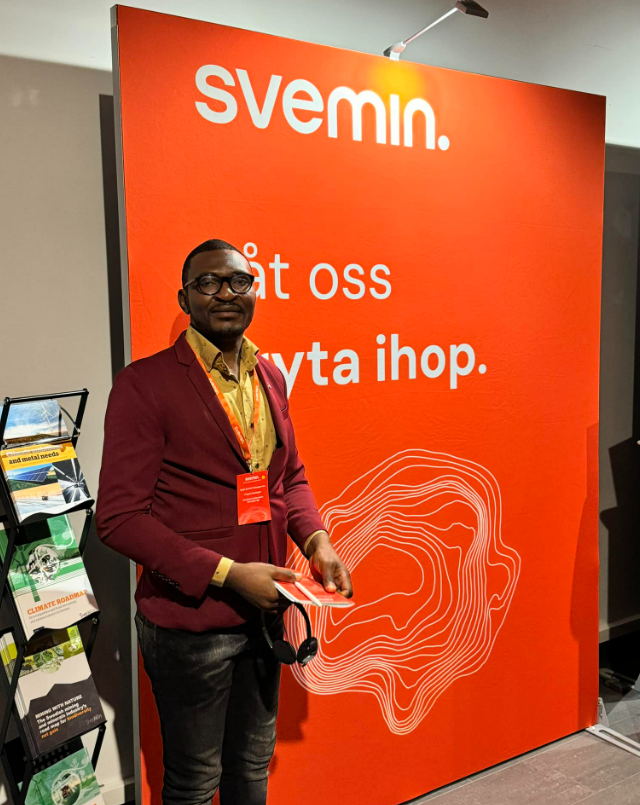
“To reverse this situation, there is an urgent need for our government to engage their Swedish counterparts to strengthen these diplomatic and economic ties. Doing so will strengthen Cameroon Sweden bilateral relations, and get Cameroon reinstated into the list of eligible countries,” Kindong suggested.
When a country begins to lose access to international education opportunities of this magnitude, it is expected trigger serious national reflection. Scholarships like the SISGP are not simply about studying abroad. They are part of broader systems of international cooperation and development partnerships. When countries are removed from such programs, it often signals deeper concerns about governance and or institutional credibility.